
Adveniat Regnum Tuum in Father Dehon: Kingdom, reparation, and oblation
Prelekcja wygłoszona w czasie Jubileuszu sercańskiego w Quito 12 marca 2026 r.
Źródło tekstu: Presentation by Fr. Victor de Oliveira Barbosa SCJ
Introduction
Among the major categories of biblical theology and Christian spirituality, few are as central as the notion of the Kingdom of God. It runs through the entire Scriptures, from the prophetic promises of the Old Testament to Jesus' preaching in the Gospels, and constitutes the ultimate horizon of Christian hope.
When Jesus begins his public mission, according to the testimony of the Gospel of Mark, he proclaims: "The time is fulfilled, and the Kingdom of God is at hand; repent and believe in the Gospel" (Mk 1:15). This proclamation is not simply one religious announcement among others. It reveals the fundamental conviction of the Christian faith: God is acting in history to definitively establish his lordship of love over humanity and creation.
The expression "Kingdom of God" should not be understood primarily in a territorial or political sense. Rather, it refers to God's saving action that transforms the world and leads humanity to full communion with Him. The Kingdom is the dynamism of grace that renews the human heart, restores relationships between people, and guides history toward its eschatological fulfillment.
For this reason, contemporary theology insists that the Kingdom is not only a future reality. It is simultaneously present and future. Present, because in Jesus the Kingdom is already manifest: in healings, in the forgiveness of sins, in the welcoming of the poor and sinners, in the revelation of the Father's merciful love. Future, because its fullness is yet to come, when God will be "all in all" (1 Cor 15:28).
In this sense, the Kingdom constitutes the heart of Christ's mission and the foundation of the Church's mission. As theological tradition reminds us, the
Church is not the Kingdom, but its sacrament and instrument in history. It exists to proclaim and serve the coming of the Kingdom.
This perspective also illuminates the spirituality of many religious families. Among them, the Congregation of the Priests of the Sacred Heart, founded by Father Leo Dehon, found in the invocation of the Our Father, "Adveniat Regnum Tuum - Thy Kingdom come," the synthesis of its spiritual and apostolic identity.
For Father Dehon, this expression was not only a prayer but a true program of life and mission. It expresses the deep desire that the love revealed in the Heart of Christ transform the hearts of people and the structures of society.
For Dehon, the Kingdom of God is not an abstract reality, but the concrete manifestation of the love of Christ that wants to penetrate people's lives and the organization of society.
The reflection I propose in this conference seeks precisely to deepen this perspective. We will do this in four main moments:
1. Father Dehon's understanding of the Kingdom of the Heart of Jesus in souls and in society.
2. The vocation of the Dehonians as witnesses to the primacy of the Kingdom, according to our Rule of Life.
3. The missionary dimension of this vision in the experience of the mission in Ecuador.
4. The relationship between the motto Adveniat Regnum Tuum and the charism of oblation and reparation.
O autorze
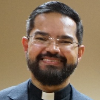
ks. dr Victor de Oliveira Barbosa SCJ
sercanin, koordynator Centro Studi Dehoniani w Rzymie (2022-2025), doktor teologii duchowości, wykładowca na Papieskim Uniwersytecie Gregoriańskim w Rzymie.
 https://orcid.org/0009-0000-0674-7605
Foto: Dehonians